You can spot the wrong copywriter for a dice brand inside three sentences. They write up your sharp-edge resin set the way they'd write up a phone case. Clean, correct, and forgotten before the buyer scrolls. I've rebuilt enough of those pages to know the fix isn't fancier adjectives. It's hiring someone who has actually sat at the table.
So here's how I'd screen for that, whether you're staffing your first product page or replacing a writer who never got the hobby. The right tabletop brand game accessories e-commerce copywriter sharpens every sentence with purpose. They turn a spec sheet into the reason a player reaches for a card, they treat search and conversion as one job instead of two, and they write like someone who owns dice, not someone who sells them.
TL;DR Quick Answers
Tabletop Brand Game Accessories E-Commerce Copywriter
A tabletop brand game accessories e-commerce copywriter writes the product pages, collection pages, and email flows that sell dice, sleeves, playmats, deck boxes, dice trays, and GM screens online. The specialists translate specs into what a player feels at the table, keep every listing original for search, and write like someone who actually rolls, not a vendor who just sells.
What a strong one does for a gaming accessories brand:
Turns specs like GSM, dimensions, and materials into player benefits instead of feature lists.
Writes a unique copy for every SKU, so Google never sees duplicated manufacturer text.
Knows the hobby's rhythms: crowdfunding, backer psychology, MSRP pressure, and marketplace rules.
Holds one consistent brand voice across the whole catalog.
Bottom line: hire for category fluency, conversion skill, and product clarity. Test it with a paid sample on one real SKU before you commit.
Top Takeaways
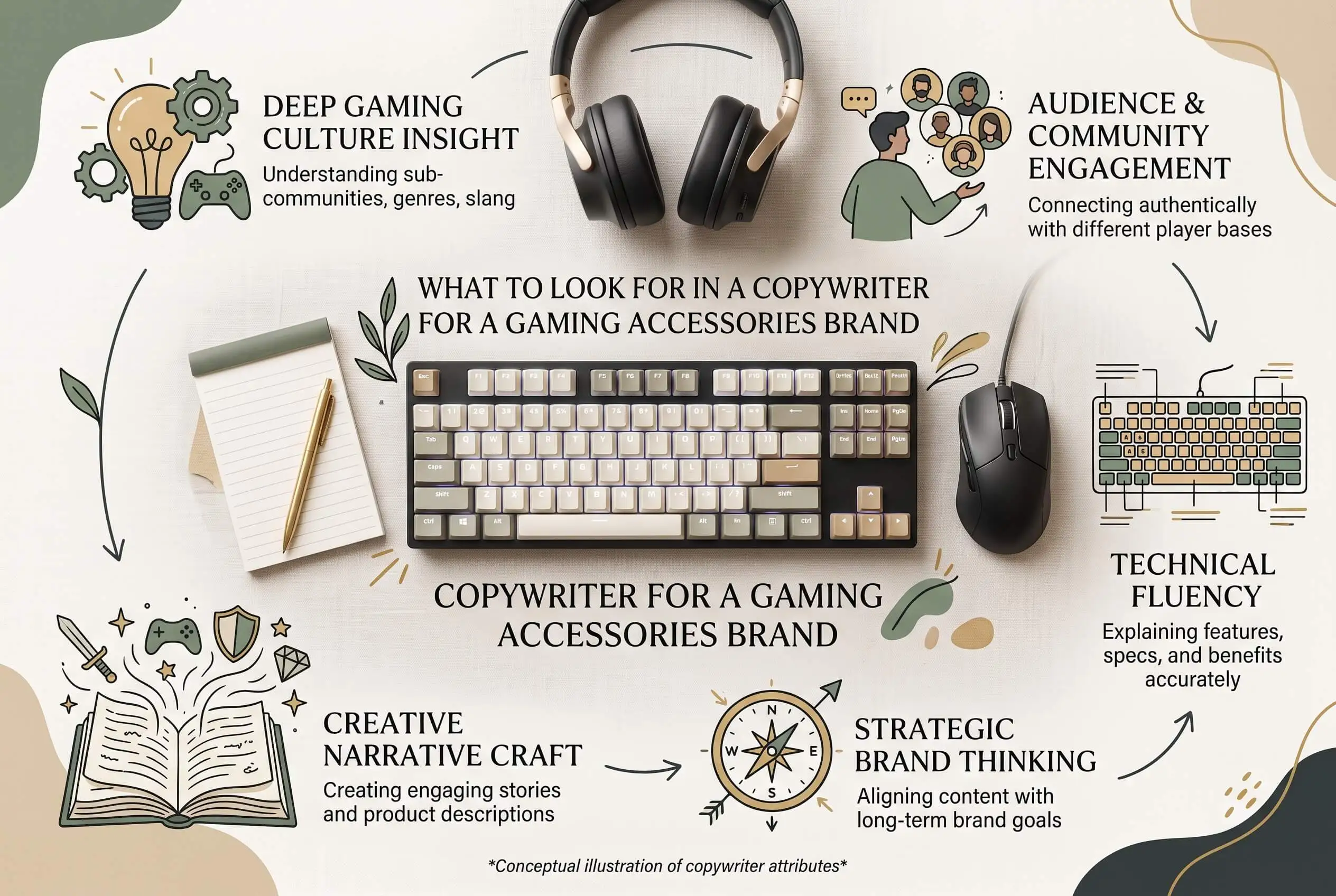
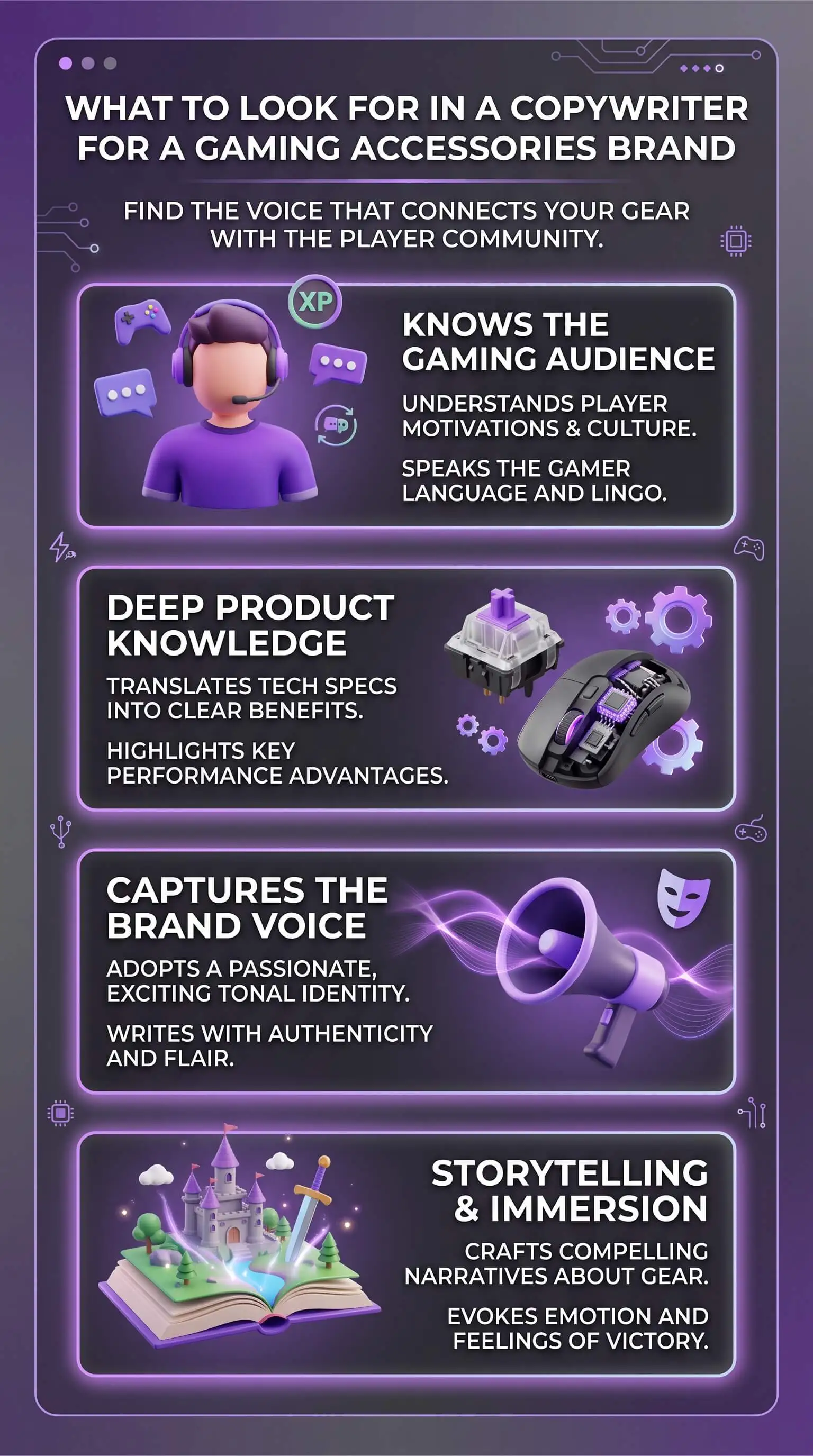
Screen for four things: category fluency, conversion skill, product clarity, and a voice that sounds like your store.
Good copywriting turns a spec into the experience a player is paying for, not a list of materials.
Pay for a test on one real SKU before you sign anything catalog-wide.
Keep every product description original. Copy pulled from the manufacturer costs you both rankings and trust.
A Specialist Beats a Generalist Every Time
Picture your catalog as a party walking into a dungeon. A generalist copywriter is the lone adventurer who swings at anything and masters nothing. They'll describe your GM screen, sure. They'll also treat it like a folder with art on the front. A specialist reads the room. They know a GM screen hides your rolls and holds the tables you actually reach for, that a dice tray saves the finish on the table and keeps a crit from bouncing into someone's soda, and that a deck box tells the world how much a player cares about the collection inside it.
Category fluency isn't a bonus round. It's the whole game. A writer who already works in tabletop knows the rhythms that run this business: crowdfunding cadence, backer psychology, the squeeze between MSRP and margin, the listing rules on every marketplace, and the DnD and TTRPG marketing language that makes players feel like the product belongs at their table. You spend less time explaining and more time shipping.
The Skills That Actually Matter
Treat your shortlist like a stat block. A few core attributes decide whether a candidate can carry the party. Check these before you roll.
Conversion writing
Can they move a browser to add-to-cart? Look for benefit-led copy over feature dumps. A spec line says the playmat measures 24 by 14 inches. A benefit line says it gives every player room to breathe and keeps loose cards from sliding into the snack bowl. Same fact. Very different sale.
Product clarity
This is the real test, and it's where most writers wash out. A gaming accessories copywriter earns the fee by turning GSM, millimeters, and material names into something a buyer can picture and want. Vague copy breeds returns. Clear copy sets the right expectation, and the right expectation is what protects your reviews.
Search and conversion as one job
Strong e-commerce copy pulls double duty on a single page. It answers the exact thing a shopper typed into Google, then it closes the sale once they land. Ask a candidate how they run keyword research, and how they keep a hundred SKUs from reading like the same paragraph. Copy lifted from the manufacturer sinks your rankings, so original writing per product is the baseline, not the upsell.
Voice range
Your whole catalog needs to sound like one store, whether that store is playful, high-end, or deep in the lore. A strong writer holds that voice from the first product page to the last, and matches your brand instead of painting over it.
How to Vet Someone Before You Commit
Don't hire on vibes. Ask for samples in the category, not a portfolio of anything and everything. Then pay for a small test on one real SKU. A polished generic sample proves a person can write. A test on your actual product proves they can write for your player, the same way an ESG SEO marketing and ads firm has to prove it understands the audience before shaping the message. Watch how they ask questions, too. The pros want to know the game, the audience, and the brand voice before they draft a line. Rolling for initiative here saves you from a bad contract later.
A few red flags, plainly. No category work, only unrelated blog posts. Features listed with nothing translated into what a player feels. Promises of overnight rankings. One template stamped onto every product in the store. Any one of those, and I'd keep looking.
Tabletop buyers don't shop on features; they shop on whether the brand feels like a player at their own table. I've written the welcome flow for Awesome Dice and the landing page for Firelight Fables, and the difference between an okay e-commerce store and a great one almost always comes down to whether the copy reads like someone who actually rolls.”
7 Essential Resources
Before you hire, brief, or judge a candidate, walk this ground first. Seven links, each one worth the click.
Nielsen Norman Group: Tips for Better Product Descriptions. Usability-tested guidance on what shoppers actually need from product copy.
Nielsen Norman Group: UX Guidelines for Ecommerce Product Pages. How a product page earns the sale, section by section.
Baymard Institute: product description testing. The research on why thin descriptions send buyers back to the search results.
Google Search Central: Intro to Product Structured Data. The schema that gets your product pages into rich results.
Schema.org: Product. The reference a search-aware writer keeps open while drafting.
BoardGameGeek. Where your buyers already hang out. Read how players talk about their gear.
Kickstarter: Creator Tips for Games. The crowdfunding playbook that shapes how tabletop products launch.
These seven resources show what a strong board game copywriting service should bring to the table: research-backed product page structure, SEO awareness, buyer-language fluency, and crowdfunding context that helps tabletop products get found, trusted, and sold.
Supporting Statistics
Three numbers that argue this better than I can.
Shoppers abandon roughly 70% of online carts, a 70.22% average across 50 studies (Baymard Institute). Copy that answers the hesitation right on the product page keeps more of those carts alive.
42% of shoppers have bailed on a cart over poor product titles and descriptions (Salsify). Weak writing by itself can cost you close to half your buyers.
The playing cards and board games market ran about $19.9 billion in 2024 and is headed for $31.9 billion by 2030, growing 8.3% a year (Grand View Research). A bigger category means more competition, and sharper copy is how you stand out.
Final Thoughts and Opinion
Here's the honest version, from someone who has rewritten enough tabletop pages to hold an opinion.
Most accessory stores sell products that outclass the words describing them. The dice are gorgeous. The photography is dialed in. The table reactions are real. What's missing is the voice. A buyer who found your store already loves the hobby, so you don't need to sell them on dice. You need to show them your store is the kind of place a player like them shops. That's the copy's job to fix. Design won't do it, and neither will more ad spend.
If you fix one thing this quarter, fix the product page. It's the cheapest upgrade with the biggest return, and most of your competitors still haven't bothered.
Frequently Asked Questions
What does a gaming accessories copywriter actually do?
Writes the product and collection pages, the welcome and abandoned-cart emails, and the campaign copy that turns browsers into buyers. The good ones translate specs into player benefits and keep every listing original for search.
How's a tabletop copywriter different from a general e-commerce copywriter?
A tabletop writer already knows your products and your players. They get crowdfunding, community voice, and why a dice tray or deck box matters, so they skip the learning curve a generalist has to climb on your dime.
How much should I budget for product page copy?
It depends on scope and catalog size, so use a paid test on one SKU as your price benchmark. Judge the result on clarity and conversion, not word count.
Freelancer or agency?
Either can work. A freelancer usually gives you one consistent voice and a direct line. An agency gives you range and volume. Match the pick to your catalog and your timeline.
How do I test a writer before a full project?
Hand them one real product and a short brief, then watch how they research, what they ask, and how they turn specs into benefits. A strong sample on your own SKU tells you more than any portfolio.
Start With One Page
Start small. Pick one hero SKU, hand it to a writer who already knows the table, and set the new page next to the old one. If it finally reads like the dice sound when they hit felt, you found your writer. Then roll that voice out across the rest of the catalog, with digital marketing services supporting the product pages, search visibility, and buyer journey behind it.